









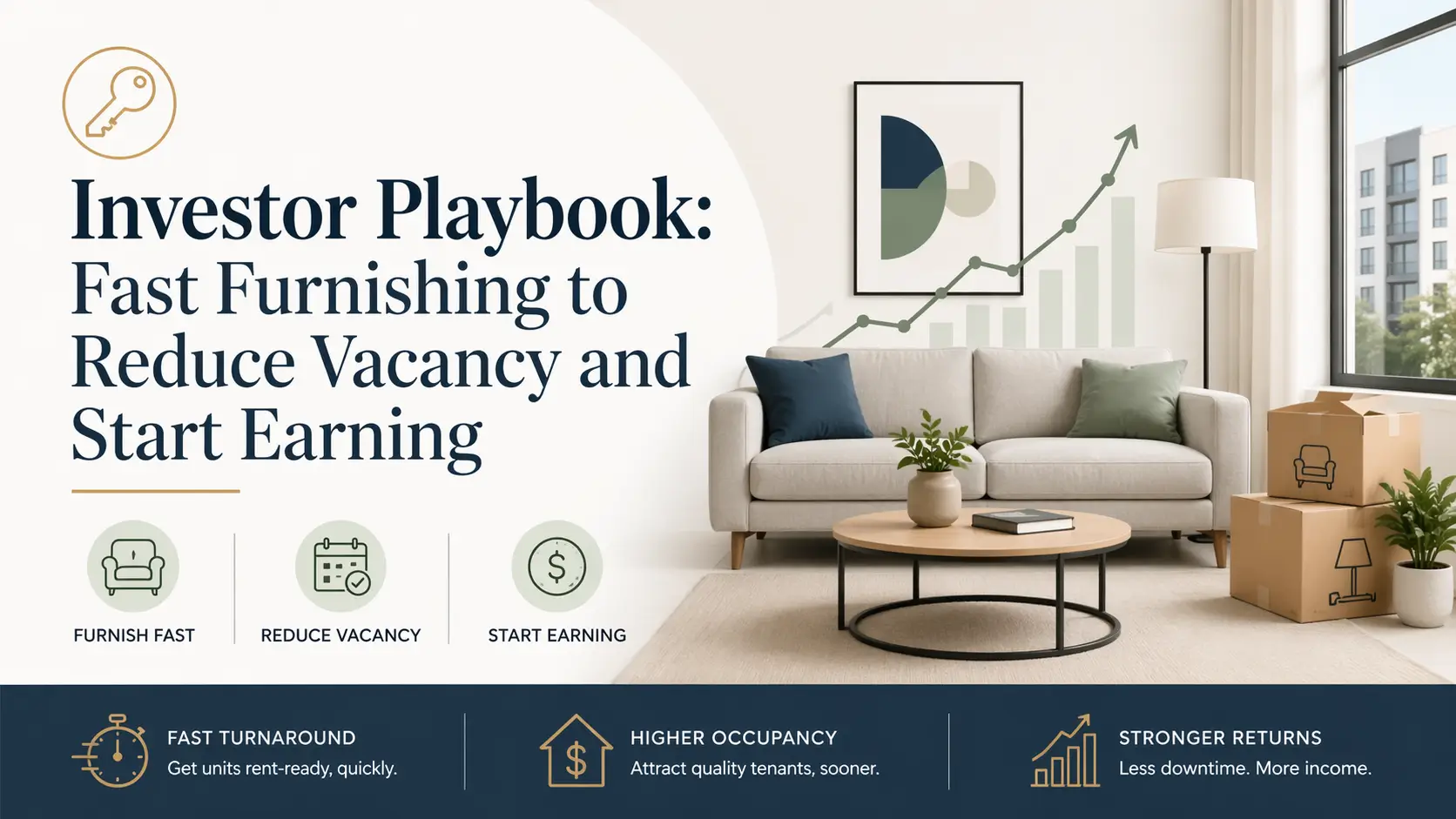
In rental investing, every empty day has a price tag. For investors looking to shorten that gap between acquisition and income, turnkey furnishing solutions such as https://packages.fullflat.com can help transform a vacant unit into a move-in-ready asset much faster than sourcing everything piece by piece. Speed matters, but so does making the property attractive to the right tenant profile from day one.
Table Of Content
- Why Vacancy Is More Expensive Than Many Investors Realize
- The Investment Case for Fast Furnishing
- Time-to-income is a key performance driver
- Presentation influences tenant behavior
- Standardization reduces decision fatigue
- What “Fast Furnishing” Actually Means
- Matching Furnishing to Your Rental Strategy
- Long-term rentals
- Mid-term rentals
- Short-term rentals
- How to Furnish for ROI, Not Just Appearance?
- Focus on durability over trendiness
- Design for the target tenant
- Keep the visual story simple
- Operational Advantages Beyond the First Lease
- Common Mistakes That Slow Down Earnings
- Final Thoughts
Why Vacancy Is More Expensive Than Many Investors Realize
Vacancy is not just the absence of rent. It is a period when mortgage payments, taxes, insurance, utilities, and maintenance continue to accumulate while the asset produces nothing. On top of that, a property that sits too long can create a psychological drag: owners begin lowering standards, discounting rent, or rushing decisions simply to stop the bleeding.
Fast furnishing addresses one of the most common causes of delayed occupancy. Even in strong rental markets, an unfurnished or poorly presented apartment often photographs worse, shows worse, and converts more slowly. Today’s tenants, especially young professionals, corporate renters, students, and short- to mid-term occupants, increasingly expect a home that feels ready rather than incomplete.
The Investment Case for Fast Furnishing
Time-to-income is a key performance driver
Many investors focus heavily on purchase price and projected rental yield, but the real-world return starts only when a tenant signs. If furnishing delays the launch by three or four weeks, that lost income is gone for good. A faster setup can improve annualized returns simply by bringing forward the first rent payment.
Presentation influences tenant behavior
A well-furnished unit creates a clearer emotional response during online browsing and in-person viewings. Tenants are more likely to imagine themselves living in a space that already feels functional, comfortable, and visually coherent. That can lead to more inquiries, shorter marketing periods, and stronger negotiating power for the landlord.
Standardization reduces decision fatigue
Investors with one unit may underestimate how many decisions furnishing requires. Investors with several units quickly discover that furniture selection can become a time sink. Fast furnishing systems reduce the need to compare dozens of retailers, coordinate separate deliveries, and solve compatibility issues between pieces. Standardization is especially valuable for landlords building a repeatable operating model.
What “Fast Furnishing” Actually Means
Fast furnishing is not about filling a property with random furniture as quickly as possible. It means using a streamlined process to equip a rental with the essential pieces, layout logic, and visual consistency needed to launch fast and rent well.
That usually includes living room furniture, bedroom essentials, dining solutions, lighting, storage, and decorative elements that make the unit feel complete. In some cases, it also means choosing packages designed around specific tenant needs, such as compact urban apartments, premium executive rentals, or high-turnover furnished units.
The goal is not luxury for its own sake. The goal is functionality, speed, and market fit.
Matching Furnishing to Your Rental Strategy
Long-term rentals
For long-term rentals, furnishing may be selective depending on the market. In some cities, tenants expect unfurnished apartments. In others, furnished options command a premium, especially in business districts or areas with high newcomer turnover. Investors should furnish only to the level that supports local demand and pricing power.
Mid-term rentals
Mid-term stays, often one to six months, benefit the most from fast furnishing. Relocating professionals, visiting academics, medical staff, and remote workers usually want a home that is fully usable from the first evening. In this segment, delays in setup directly delay revenue.
Short-term rentals
For short-term rentals, furnishing is inseparable from the business model. Guests compare listings visually, and the first impression determines click-through rate as much as nightly price. Speed matters, but consistency matters even more because guest expectations are immediate and unforgiving.
How to Furnish for ROI, Not Just Appearance?
Focus on durability over trendiness
Investors should think like operators, not decorators. Items that look great but wear out quickly can destroy margins through replacements, repairs, and negative reviews. Neutral palettes, commercial-grade fabrics, and easy-to-clean materials usually outperform trend-driven choices.
Design for the target tenant
A city-center one-bedroom for professionals should not be furnished the same way as a family-oriented suburban unit. The best furnishing strategy supports the tenant’s lifestyle. A work-friendly dining table, quality mattress, sufficient storage, and sensible lighting often matter more than decorative extras.
Keep the visual story simple
The most effective rental interiors are usually clear, calm, and functional. Cluttered styling can make a property feel smaller and distract from the architecture. Clean lines and coordinated tones photograph well and appeal to a broader audience, which is exactly what investors need.
Operational Advantages Beyond the First Lease
Fast furnishing does more than help lease a vacant property. It also creates a foundation for smoother operations later. When replacement items are standardized, turnovers become easier. When layouts are repeatable, staff or contractors can reset units faster. When suppliers are reliable, expansion becomes more manageable.
This is why experienced investors often move away from one-off furnishing decisions and toward systems. A scalable approach saves time not only at launch but across the full life of the asset.
Common Mistakes That Slow Down Earnings
One of the biggest mistakes is treating furnishing as an afterthought. Investors may complete renovation, photograph the empty unit, and only then begin shopping. That sequence often leads to weeks of lost time.
Another mistake is over-furnishing. Too many items increase cost without necessarily increasing rent. The right question is not, “What else can I add?” but, “What does the tenant need to say yes quickly?”
A third mistake is trying to optimize every purchase individually. Chasing small savings across multiple stores can create delivery delays, mismatched styles, and more management work than the savings are worth.
Final Thoughts
The fastest path from vacancy to income is rarely accidental. It comes from making furnishing part of the investment strategy, not a last-minute task. Investors who reduce setup time, present the property well, and align furnishings with tenant demand can shorten vacancy, protect pricing, and start generating revenue sooner.
In a market where timing often matters as much as yield, fast furnishing is not just a design decision. It is an operational advantage that helps turn an empty property into an earning asset with less friction and more predictability.






No Comment! Be the first one.