








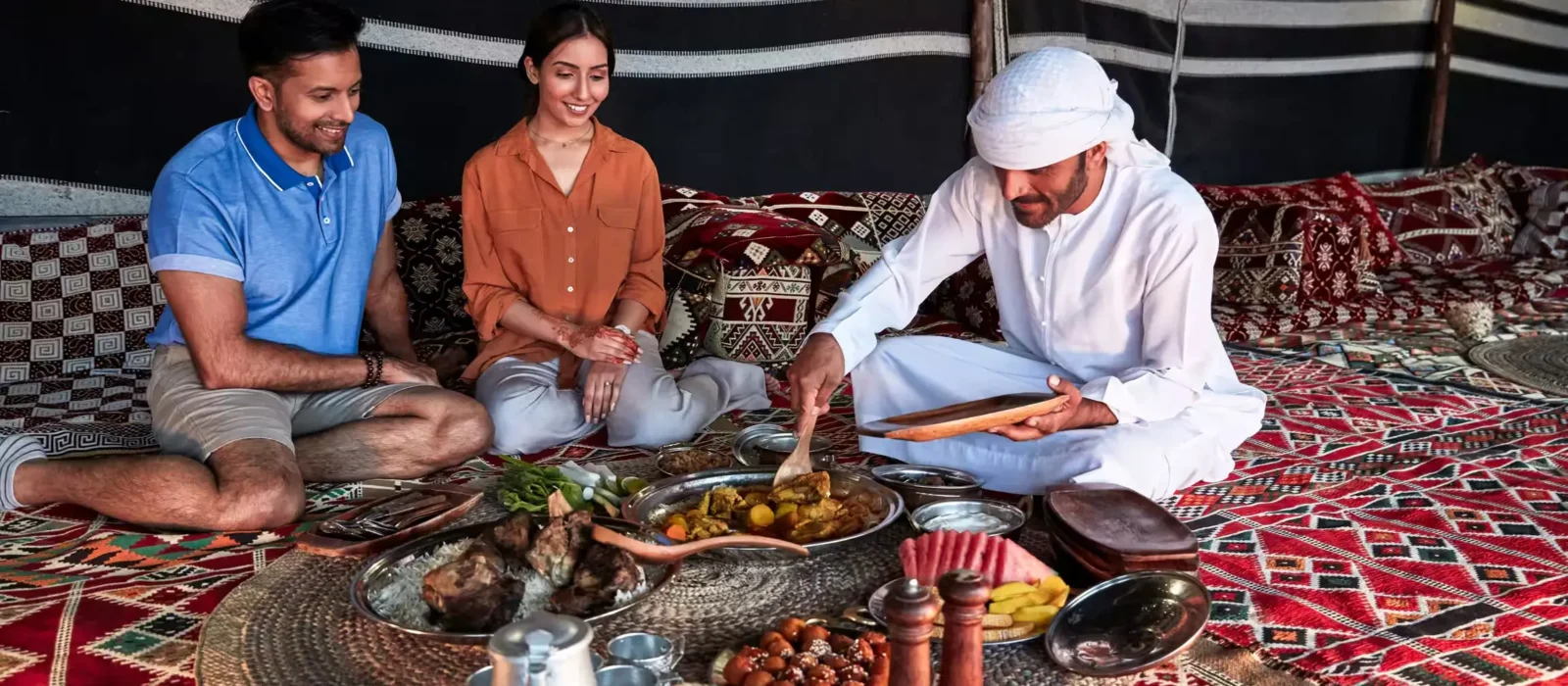
Food is a vital aspect of the daily life throughout the United Arab Emirates. It connects families and welcomes guests. It also showcases the country’s rich history as a place of meeting for traders, travelers and other communities from all over the globe.
Table Of Content
Nowadays, the UAE is home to one of the most varied eating experiences in the world. Tourists can indulge in traditional Emirati dishes, Middle Eastern street food, South Asian dishes, international restaurants, as well as modern cafes, usually in the same area.
Understanding Emirati Cuisine
The traditional Emirati food is formed by the desert landscape of the country and coastal communities, as well as trading past. Common ingredients include rice dates, fish, meat along with spices, dairy products.
A lot of Emirati dishes are slow cooked and are designed to be enjoyed by all. Flavors are generally warm and aromatic instead of highly spicy. Ingredients such as cardamom cinnamon, saffron and saffron as well as dried lime and cloves are often used.
Machboos is one of the most well-known dishes which is made of spicy rice and lamb, chicken, or fish. It’s like other rice dishes that are found throughout the Gulf however it has its own distinctive flavor.
Harees is a different traditional dish. It combines meat and wheat and is cooked until they become a creamy, comforting meal. It is particularly popular in Ramadan as well as weddings and gatherings with family.
Thareed is made up of bread that has been that is layered with vegetable stew and meat. Since the bread absorbs the broth it makes the dish filling and full of flavor.
Seafood is also a key part in Emirati food preparation. Fish was an important ingredient in coastal cuisine prior to the time that the country became an advanced tourism and business center.
Traditional Desserts and Drinks
There is no introduction to Emirati food is incomplete without mentioning luqaimat. The small fritted dumplings are crispy on the outside, but soft inside. They are typically consumed with date syrup or some other sweet topping.
Khameer Chebab and Khameer are both popular traditional breads that are eaten for breakfast or with honey, cheese or syrup made from dates.
Arabic coffee, commonly referred to as gahwa, is firmly linked to hospitality. It is typically lightly roasted, flavored with cardamom and offered in smaller cups. The guests may also receive dates along with the coffee.
Karak tea is now an regular drink across the UAE. This milky, sweet tea is usually flavored by cardamom. It is sold at cafeterias, restaurants and even at roadside stores.
Street Food and Casual Dining
The UAE has a thriving food culture that is casual. Shawarma is among the most sought-after choices. Thin slices of cooked meat can be wrapped up in bread, topped with pickles, garlic sauce vegetables, or tahini.
Falafel, hummus and falafel are also available. Grilled meats Manakish, falafel, and fresh juices are all readily available. They are generally inexpensive and easy to prepare and are popular with employees, students as well as residents and tourists.
There are small cafeterias scattered across the nation. They serve burgers, sandwiches as well as juices, tea and local dishes until late at night. A visit to a local cafeteria could be among the most convenient ways to get a taste of daily life within the UAE.
A Truly International Dining Scene
Since the UAE is the home of people from a variety of different nationalities, the dining scene is very diverse. Indian, Pakistani, Filipino, Lebanese, Iranian, Turkish, Chinese, Japanese, African, European, and American foods are available throughout the country.
Dubai as well as Abu Dhabi are especially known for their exquisite cuisine. The luxury hotels and the major shopping districts have restaurants run by chefs who are internationally renowned. But some of the best meals are usually served in family-run eateries that are smaller and intimate.
Locations like Deira, Bur Dubai, Karama, Al Nahda, and International City in Dubai are well-known for their affordable international cuisine. Within Abu Dhabi, areas around the city’s centre and more traditional residential areas also have an array of food options.
Cafe Culture in the UAE
Cafes have emerged as an important element of the UAE’s cultural scene. People go to them to meet for study, meetings remote work, family gatherings and to catch the latest news with their friends.
Alongside the international chains, independent coffee shops have gained popularity. They are focusing on specialty coffee, innovative desserts, beautiful interiors and regionally inspired flavors.
There are cafes that serve drinks with dates, saffron and the pistachio as well as Arabic coffee. Other cafes blend traditional ingredients and modern presentation.
Dining Etiquette
In order to dine in the UAE It is helpful to be aware of a few rules. If you’re invited to an individual’s house eating or drinking coffee is typically considered an act of respect.
Traditional meals are served on large, shared plates. In some places people eat their meals with their right hand. In Ramadan guests must be considerate of people who fast and adhere to the rules of dining in public.
Restaurants usually serve ample portions, therefore sharing food is practical as well as fun.
Final Thoughts
The food scene in the UAE is a tale of the country’s history. Traditional Emirati cuisines reflect its coastal and desert origins as well as international restaurants reflect the diverse communities that are residents of the country.
From an omelette to the taste of karak tea, or a lunch in a neighborhood restaurant, food is one of the best methods to learn about the UAE’s hospitality as well as its diversity and everyday life. Get more updated info about food and culture of uae on uaeranks.com.



No Comment! Be the first one.