







The first meeting often begins before anyone says a word.
Table Of Content
- An Office Reflects More Than a Company’s Budget
- Why Workplace Experience Is Becoming a Business Priority
- The Best Offices Rarely Feel Overdesigned
- Employees Experience the Office Differently Than Visitors
- Why Adaptability Is Replacing Permanence
- Investing in Confidence Rather Than Furniture
- Final Thoughts
Whether it’s a potential client, a job candidate, an investor, or a business partner, people start forming opinions within moments of entering an office. They notice the atmosphere, the layout, the lighting, how people interact, and whether the space feels organised or outdated. In many cases, these early impressions quietly influence how a business is perceived long before the actual conversation begins.
Across Dubai and Abu Dhabi, this shift is becoming increasingly visible. Businesses are paying closer attention to how their workplaces represent their brand, and office furniture specialists such as Urban 411 Office Furniture are seeing more organisations approach workspace planning as part of their overall business strategy rather than simply a purchasing decision. The conversation has evolved from buying desks and chairs to creating workplaces that communicate professionalism, confidence, and long-term thinking.
An Office Reflects More Than a Company’s Budget
A modern office is no longer expected to look expensive. It is expected to feel intentional.
Employees notice whether the workspace supports their daily routines. Clients notice whether meetings feel comfortable and organised. Visitors notice whether the environment reflects attention to detail.
These impressions are rarely created by a single piece of furniture. Instead, they come from how every element works together. A welcoming reception area, comfortable meeting rooms, uncluttered workstations, thoughtful lighting, and consistent finishes all contribute to an environment that feels well considered.
Companies are increasingly recognising that the workplace itself has become an extension of their brand identity.
Why Workplace Experience Is Becoming a Business Priority
The role of the office has changed significantly over the past few years.
For many organisations, the workplace is no longer somewhere employees simply complete daily tasks. It has become a place for collaboration, decision-making, client engagement, mentoring, and company culture.
This shift has encouraged businesses to ask different questions during office upgrades.
Instead of asking:
“How many desks do we need?”
They are asking:
Will this layout support hybrid teams?
Does the office encourage collaboration without creating distractions?
Can meeting spaces adapt to different types of discussions?
Does the environment represent our company in the right way?
These questions focus less on furniture itself and more on how people experience the workplace every day.
The Best Offices Rarely Feel Overdesigned
One misconception about workplace design is that impressive offices must be filled with expensive finishes or dramatic interiors.
In reality, many of the most successful workplaces feel surprisingly simple.
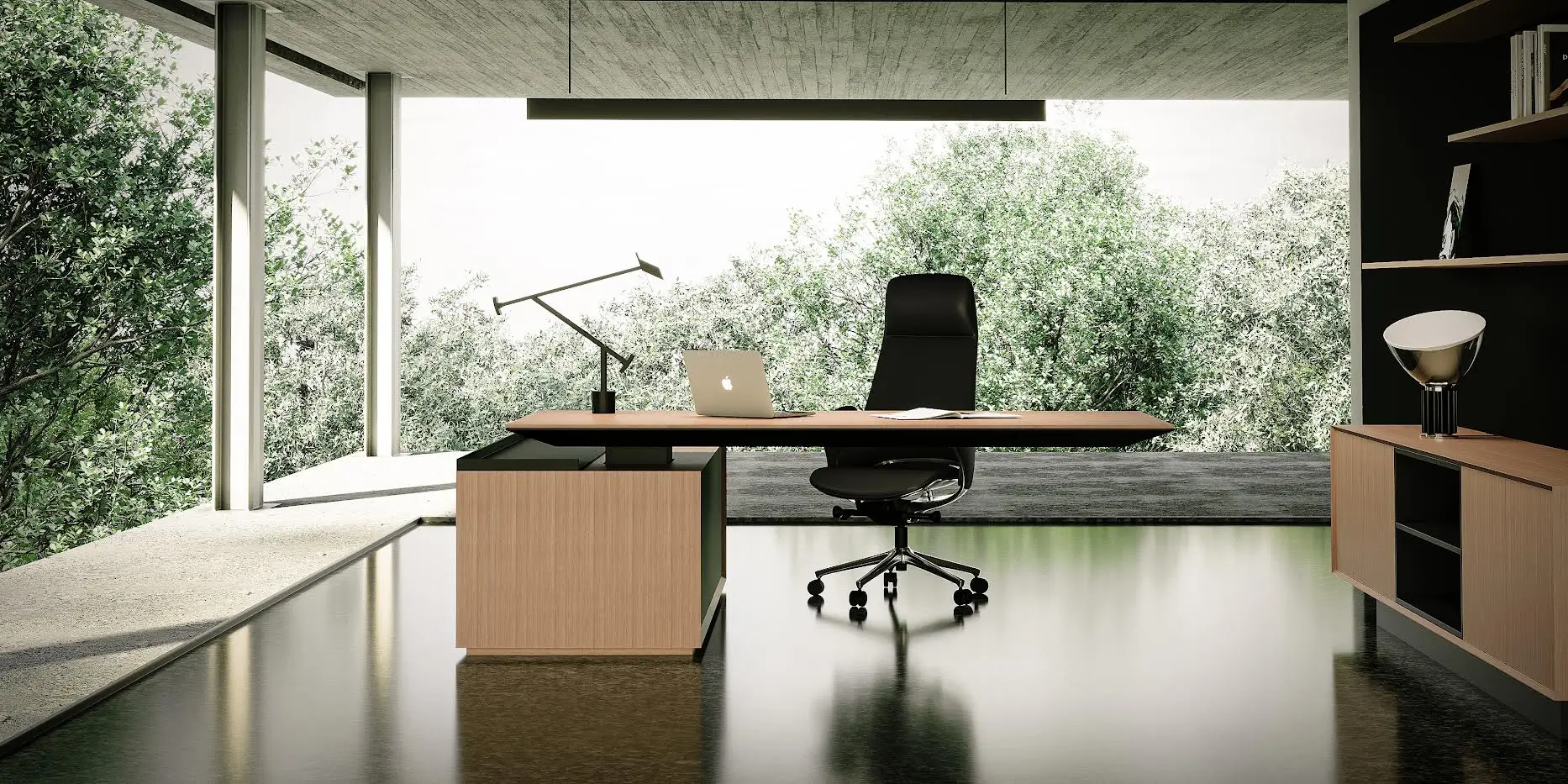
Storage is integrated instead of visible. Cable management keeps desks uncluttered. Meeting areas are designed for conversation rather than appearance. Furniture is selected to support long working hours instead of following short-lived trends.
Good office design often goes unnoticed because everything simply works as expected.
That quiet efficiency leaves a stronger impression than unnecessary decoration.
Employees Experience the Office Differently Than Visitors
Visitors may spend an hour in an office.
Employees spend thousands of hours there every year.
This difference explains why businesses are investing more carefully in workplace quality. Comfortable seating, practical storage, adjustable workstations, and well-planned layouts help reduce everyday frustrations while supporting focus and productivity.
Small improvements repeated every working day often have a greater long-term impact than one dramatic design feature.
Why Adaptability Is Replacing Permanence
Few businesses expect their office requirements to remain exactly the same for the next decade.
Teams grow. Departments change. Technology evolves. Hybrid work continues to reshape how organisations use space.
As a result, flexibility has become one of the most valuable qualities in workplace planning.
Modular workstations, movable meeting furniture, adaptable storage systems, and height-adjustable desks allow businesses to respond to change without completely redesigning their offices.
Instead of designing for today’s needs alone, organisations are increasingly planning for how they might work three or five years from now.
Investing in Confidence Rather Than Furniture
Perhaps the biggest change is how businesses think about office furniture itself.
For years, furniture was treated as a purchase that happened near the end of an office fit-out.
Today, many organisations see it differently.
The workplace influences recruitment, employee satisfaction, client perception, collaboration, and even the confidence people feel when representing their company.
That makes office furniture less of an operational expense and more of a long-term business investment.
Final Thoughts
The most memorable offices are rarely the ones with the highest budgets. They are the ones that make people feel comfortable, confident, and welcome from the moment they arrive.
As workplaces across the UAE continue to evolve, thoughtful workspace planning, office furniture solutions, and flexible office layouts are becoming part of how successful organisations present themselves to employees, customers, and partners. Businesses working with experienced office furniture suppliers, including Urban 411 Office Furniture, are recognising that the right workplace is not only where work happens—it is also where lasting impressions are created.






No Comment! Be the first one.