







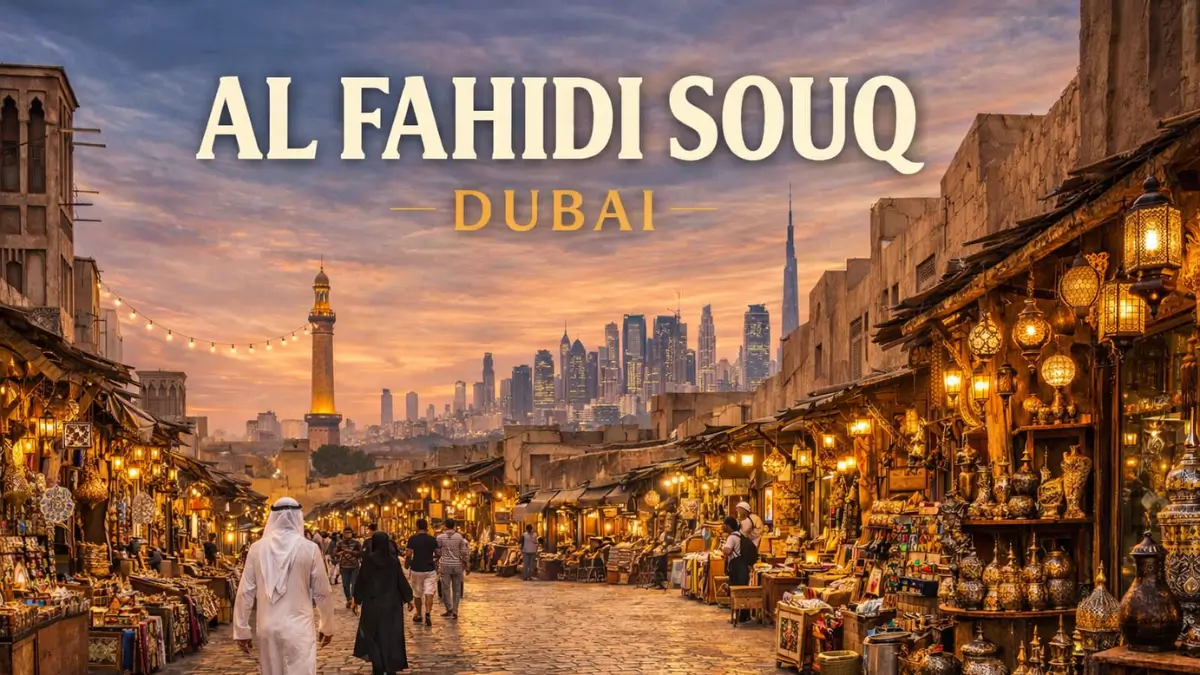
Dubai has become famous due to its advanced skyline, upscale shops and modernists. Nevertheless, beneath the shimmering skyscrapers, there is the rich cultural heritage which narrates the trading history of the city. The Al Fahidi Souq Dubai is one of the most appropriate places to experience this heritage because it is a traditional market that epitomizes the old Dubai. The colorful market is situated in the old Fahidi area of Dubai close to Dubai creek where traders can have an opportunity to experience old architecture, local craft, and the real Emirati culture and have their exclusive shopping experiences.
Table Of Content
- Location and How to Reach Al Fahidi Souq
- Where Al Fahidi Souq is Located
- Transportation Options
- History of Al Fahidi Souq
- Origins of the Souq
- Significant milestones in the history of the souq are
- Evolution Over Time
- It is facing a major transformation which is
- Traditional Design and Architecture
- Traditional Buildings and Wind Towers
- The major building characteristics are
- Narrow Courtyards and Alleys
- These are unique features
- What You Can Buy at Al Fahidi Souq
- Traditional Handicrafts
- The common hand-crafts are
- Textiles and Fabrics
- Visitors can find
- Spices and Local Products
- Souvenirs for Tourists
- Popular options include
- Cultural Experiences at Al Fahidi Souq
- Conventional Cafes and Restaurants
- Visitors can enjoy
- Art Galleries and Museums
- These venues feature
- Cultural Events and Festivals
- These events may include
- Best Time to Visit Al Fahidi Souq
- Seasonal Considerations
- The most convenient hour to go to the souq is
- Ideal Time of Day
- Morning visits provide
- Evening visits offer
- Al Fahidi Souq Travelling tips
- Useful travel tips include
- Tours and Playoffs of the Attracted Sightseeing
- Dubai Creek
- Al Fahidi Historical Neighborhood
- Textile Souq and Gold Souq
- Why Al Fahidi Souq Is Important for Dubai Tourism?
- Its importance includes
- Conclusion
- FAQ’s
- What is the reputation of Al Fahidi Souq Dubai?
- Where is Al Fahidi Souq located in Dubai?
- How can I reach Al Fahidi Souq?
- Is Al Fahidi Souq free of charge?
- What are the things that tourists can buy at Al Fahidi Souq?
- When is the most appropriate time to visit Al Fahidi Souq?
- Does Al Fahidi Souq have restaurants around?
- Does Al Fahidi Souq allow bargaining?
- But how many hours shall I have to hang around the souq?
- Is Al Fahidi Souq family friendly?
Compared to the contemporary malls that are presently ruling the city, Al Fahidi Souq resembles a period when Dubai was a busy trading market uniting traders of the Middle East region, Asian and African continents. Strolling around the lanes of the souq is like a time travel. Tourists will have an opportunity to visit handmade souvenirs, observe the traditional architecture of the wind towers, feast on local dishes, and get to know the mysterious history of the city. Al Fahidi Souq Dubai is a unique experience whether you are a history lover, a cultural tourist, or just want to receive some unique souvenirs.
Location and How to Reach Al Fahidi Souq
Where Al Fahidi Souq is Located
The Al Fahidi Souq is located in the Al Fahidi Historical District which is one of Dubai oldest neighborhood. The location is near Dubai creek, which is a historic waterway that was very important in the history of trading in the city.
The location of the souq is central such that the visitor can easily visit other nearby heritage sites.
Transportation Options
Al Fahidi Souq can be accessed through multiple means of transport by its visitors:
Dubai Metro: The closest one is Al Fahidi Metro Station, located in the Green Line.
Abra Boat Ride- Common wooden boats are used in going around Dubai creek, which is a picturesque and traditional journey.
Taxi Services– Taxis are very common in the city of Dubai and can drop tourists near the historical area.
Public Buses- There are a number of bus routes that cover the Bur Dubai region.
Walking Tours- Walking is another activity that a lot of the tourists like doing in the historical area to get the full experience of the traditional setting.
Due to the fact that the location is friendly to people on foot, it is strongly suggested to walk through the souq.
History of Al Fahidi Souq
Origins of the Souq
Al Fahidi Souq grew in the initial stages of Dubai when the major part of the economy was trade. The traders in the neighboring lands used to meet along the Dubai creek to trade spices, cloths, pearls, and traditional crafts. The market rapidly emerged as one of the major centers through which traders started to pass by, between Asia, Africa and the Arabian Peninsula.
Significant milestones in the history of the souq are:
Set-up as a trading hub along the Dubai Creek.
An interface between local and international merchants.
Development in the pearl trade and spice trade.
The development is adjacent to the Al Fahidi Historical District.
This is the period when markets served as commercial hubs and at the same time social meeting points as people broadcasted their stories, traditions, and cultures.
Evolution Over Time
Dubai grew and modernized and in the process most of the old markets were being replaced by modern shopping centers. Nonetheless, the Al Fahidi district was spared so as to keep the historical character of the city.
The souq is a combination of tourism and history today. It has been well-preserved to ensure that the visitors are able to get the appeal of attending traditional Arabian markets but at the same time access modern conveniences.
It is facing a major transformation which is:
Conservation of ancient structures and streets.
Reconstruction of the old wind tower houses.
Art gallery, museum and cultural space development.
Marketing of heritage tourism at Dubai.

Traditional Design and Architecture
The traditional architecture is one of the most interesting features of Al Fahidi Souq. The architecture of the buildings and streets can be traced back to the design style employed in Dubai even before the air conditioning and contemporary form of construction.
Traditional Buildings and Wind Towers
The Al Fahidi district is mostly covered with many buildings that have wind towers, which are also referred to as Barjeel. These towers were used as an ancient type of natural air conditioning.
The major building characteristics are:
Wind towers which harness cool air and move them around.
Walls made of thick stone and coral that assist in maintaining the insides.
Arabian crafted wooden beams and carved doors.
Conventional courtyards were family and trade yards.
These building features demonstrate how the inhabitants coped with the desert environment a long time ago.
Narrow Courtyards and Alleys
The structure of the souq has the form of small streets and shaded walkways that will save the visitors of the souq the extreme heat.
These are unique features:
Paving with stones, made into alleyways that linked tiny shops and galleries.
Courtyards that had secret resting areas.
Ornamental lanterns and wooden balconies.
Conventional Arabic design all over the market.
The environment of these buildings makes the visitors have a most genuine cultural experience.
What You Can Buy at Al Fahidi Souq
The experience of shopping in Al Fahidi Souq is quite different than the one in a contemporary mall. The market is oriented to traditional crafts and products of the culture which reflect the heritage of the region.
Traditional Handicrafts
The souq has many shops that deal with handmade products produced by the local artisans.
The common hand-crafts are:
Traditional and handcrafted jewelry.
Decorations made of brass and copper.
Arabian lamps and lanterns
The artwork of traditional calligraphy.
Antique collectibles
These products are great souvenirs of those who travel actively and want to receive cultural items of the first nature.
Textiles and Fabrics
One of the significant aspects of the market culture in Dubai has always been textile trading.
Visitors can find:
Silk and cotton fabrics
Hand-embroidered textiles
Old-fashioned scarves and shawls.
Arabic clothing materials
Home decoration fabrics.
This is because the vivid presentation of textiles makes the shopping appearance bright across the market.
Spices and Local Products
Another thing to be noted about the souq is the smell of spices.
Stores stock an extensive collection of products utilized in the Middle Eastern cuisine, such as:
Cardamom and saffron
Cinnamon and cloves
Dried herbs and spice blends
Traditional sweets and premium dates.
Incense and natural perfumes.
These souvenirs provide tourists with an impression of the local customs of the region.
Souvenirs for Tourists
Tourists in Al Fahidi Souq usually seek the presence of significant souvenirs to remind them about their visit.
Popular options include:
Miniature camel sculptures
All-purpose Arabian coffee pots.
Distributive plates and pottery.
Cultural art of the heritage of Dubai.
Customized gifts made by the local artists.

Cultural Experiences at Al Fahidi Souq
Al Fahidi Souq is more than a shopping center as it has various cultural experience that the visitors find useful to learn more about the traditions and the life of the old Dubai.
Conventional Cafes and Restaurants
The district has a number of cafes and small restaurants where genuine Emirati cuisine is offered.
Visitors can enjoy:
Traditional Arabic coffee
Emirati desserts and sweets
Dishes of the Middle East that are made of spices that are locally available.
Courtyard restaurant settings are relaxed.
These restaurants are the ideal place to have a meal in the middle of a day sightseeing.
Art Galleries and Museums
The Al Fahidi area is equipped with a great number of art galleries and small museums representing the local culture.
These venues feature:
Modern art as an expression of local culture.
Historical displays regarding the trading history of Dubai.
Educational exhibitions and cultural classes.
Exhibitions on antique Dubai through photography.
The visit to these spaces allows the visitors to have a better understanding of the heritage of the city.
Cultural Events and Festivals
A cultural event also takes place sometimes in the area showcasing Emirati culture.
These events may include:
Heritage exhibitions
Conventional dances and music performances.
Demonstrations of artisan craft.
Storytelling sessions: culture.
This kind of activity improves the cultural mood of the souq.
Best Time to Visit Al Fahidi Souq
Seasonal Considerations
The weather in Dubai is so hot in summer.
The most convenient hour to go to the souq is:
During November and March when it is not hot.
Spring, or late autumn, when the weather is pleasant.
Ideal Time of Day
Days are different with different experiences.
Morning visits provide:
Minimal exploration and less traffic.
Comfortable temperatures
Evening visits offer:
A lively market atmosphere
Lit-up streets and stores.
Performances and activities in culture.
Al Fahidi Souq Travelling tips
By remembering a few tips, visitors may also improve their experience.
Useful travel tips include:
Being polite when negotiating at vintage stands.
Putting on light clothes befitting the warm weather.
Using cash to buy minor things.
Going out and discovering the historical area around.
Observing the local culture and traditions.
These are some of the easy tips that will make your visit more comfortable and memorable.
Tours and Playoffs of the Attracted Sightseeing
Dubai Creek
Dubai creek is another historic place of the city. People may also visit the city aboard an abra boat that makes stops in the middle of the water to enjoy a view of the city.
Al Fahidi Historical Neighborhood
The immediate district has:
Heritage houses
Cultural museums
Traditional architecture
Art and cultural centers
Textile Souq and Gold Souq
Other popular traditional markets nearby are also available to the visitors and include:
Textile Souq fabrics/garments.
Gold Souq where they sell gold and precious metals.
The combination of these markets will deliver an entire traditional shopping experience.

Why Al Fahidi Souq Is Important for Dubai Tourism?
Al Fahidi Souq is significant in conserving the culture of Dubai.
Its importance includes:
Preservation of the historic buildings of old Dubai.
Encouraging local artists and artisans.
Cultural education to the tourists.
The heritage tourism promotion in the UAE.
To tourists who want to go beyond luxury malls and skyscrapers, the souq has provided a closer touch with the history of the city.
Conclusion
Al Fahidi Souq Dubai is not a simple marketplace. It is a living reminder of the city tradition and a reminder of the trading culture that made Dubai the global city as it is in the world. The souq with its Muslim architecture, small streets, original handicraft and rich cultural flavor provide a visitor with a unique insight into the past.
Visiting this ancient market will enable the tourists to understand the beauty of old Dubai and explore the local art, food, and cultural practices. Al Fahidi Souq Dubai offers a memorable experience of an excursion into the depths of the Arabian culture whether you are shopping souvenirs, traditional Emirati coffee or just exploring the historic streets.
FAQ’s
What is the reputation of Al Fahidi Souq Dubai?
Al Fahidi Souq is characterized by traditional handicrafts, cultural heritage, old building and true Arabian shopping experience.
Where is Al Fahidi Souq located in Dubai?
It is situated in Al Fahidi historical district in the Bur Dubai area, adjacent to Dubai creek.
How can I reach Al Fahidi Souq?
The souq is accessible by Dubai Metro, taxi, buses, and traditional abra by water crossing the Dubai Creek to the visitors.
Is Al Fahidi Souq free of charge?
No, it is free to enter the souq, yet one has to make a purchase within the market.
What are the things that tourists can buy at Al Fahidi Souq?
Handicrafts, spices, textile, souvenirs, antiques, and traditional Arabian are some of the goods that tourists are able to purchase.
When is the most appropriate time to visit Al Fahidi Souq?
It is recommended that one visit during the cooler seasons of November-March.
Does Al Fahidi Souq have restaurants around?
Of course, there are some classic cafes and restaurants in the area, which sell traditional Emirati and Middle Eastern cuisine.
Does Al Fahidi Souq allow bargaining?
Yes, bargaining is the order of the day in traditional markets and in most occasions it has assisted the visitors in receiving better prices.
But how many hours shall I have to hang around the souq?
Majority of the visitors take one or two hours to tour the souq and other historical sites.
Is Al Fahidi Souq family friendly?
Yes, it is a family-friendly place with cultural experiences that could be appropriate to all the visitors.



No Comment! Be the first one.