

Ever felt that moment when the sun hits your windshield, and your cabin turns into a space you don’t even want to sit in? That’s usually the point where drivers start looking for something stronger than regular tint, and 3M Ceramic IR Film becomes the obvious move. With ceramic tint, you’re not chasing shade; you’re cutting infrared before it ever reaches the cabin. Once you step into the world of IR rejection film, the contrast hits you immediately. Even standard car tinting Dubai options fall behind the way 3M Ceramic IR tint manages heat and glare through targeted infrared filtering.
What 3M Ceramic IR Film Is & How It Works?
Most drivers think tint is just shade. It isn’t. 3M Ceramic IR tint Dubai works on infrared control, not darkness, and you feel that difference fast when the sun hits. It uses ceramic-based filtration to manage heat before it enters the cabin. This gives the film an advantage over basic tint materials that rely on color or reflective coatings.
The idea is straightforward: stop the wavelengths that push heat inside and let the rest of the light move through like nothing had happened. That selective approach is what separates this technology from standard car window tinting options.
How the Ceramic Particles Work
Ceramic particles inside the film act as infrared-selective filters. They’re engineered to interact specifically with the wavelengths responsible for thermal buildup. Instead of darkening the glass or depending on metallic reflection, these particles absorb and neutralize infrared energy at the molecular level. It’s not about shade; it’s about controlling heat transfer through targeted IR reduction.
Step-by-Step: How the Film Manages Infrared
Infrared energy reaches the film’s outer surface.
Ceramic particles absorb the IR wavelengths tied to heat gain.
Absorbed energy is dispersed through the film’s internal structure.
Visible light passes through without interruption.
Cabin stays stable without relying on reflective metal layers.
The process keeps the view steady, stops the glass from shifting in color, and keeps the film doing its job day after day. It’s why IR blocking film functions differently from dyed or metallic tint systems.
Why Choose 3M Ceramic IR Film over Regular Tint?
Regular tint changes the look. 3M Ceramic IR tint changes the cabin. You notice it the moment sunlight hits. When you compare the long-term performance, clarity, and signal safety, the gap between the two materials becomes easy to see.
A quick look at the differences helps make the choice.
| Feature / Priority | 3M Ceramic IR Film | Dyed Tint | Metallic Tint |
| Heat control | Filters infrared (main function) | Shade only | Heat reflection through metals |
| Glare handling | Manages glare via IR control | Needs a dark shade | Depends on reflective layers |
| UV filtering | Strong UV reduction | Moderate | Strong |
| Signal impact | No interference | No interference | Can block GPS / keyless |
| Durability | Stable, doesn’t fade | Color fades | Can oxidize |
| Visibility | transmission | Needs a darker shade | May create a mirror look |
| Best suited for | Heat + clarity | Basic look | Heat control with reflection |
Key Functions That Make 3M Ceramic IR Film Effective
You can slap any tint on glass. Only a few actually change what the cabin feels like when the heat builds up. 3M Ceramic IR tint works differently because it targets the parts of sunlight that cause heat, glare, and UV impact.
Infrared Heat Control: Heat inside the cabin comes from infrared, not just brightness. 3M Ceramic IR Film filters that infrared load before it slips through the glass. This is the point where IR rejection shows its value, right when the sun starts pumping heat through the glass. The film slows temperature rise without forcing extremely dark shades, giving steadier solar heat control during sunlight and slow commutes.
Glare Management Without Reflection: Sometimes the sun hits the glass at angles that make you squint, even with regular tint. Ceramic IR Film manages that glare without using reflective metal layers. It behaves like a glare reduction film, but keeps the surface clean like a non-reflective tint, making visibility easier during daytime driving.
UV Filtering That Protects the Cabin: UV exposure doesn’t show immediate damage; it shows up slowly on seats, dashboard panels, and trims. Ceramic IR Film blocks that UV load early. Acting as a UV block tint and a UV control film, it helps keep materials from aging faster than they should, especially in cars that sit under sunlight for long hours.
Better Comfort in Local Heat Conditions: When sunlight stays on the glass, basic tint reaches its limit fast. Ceramic IR Film handles infrared more directly, so the cabin doesn’t spike in temperature the same way. That’s why many people looking for car tint Dubai or checking heat control tint UAE options lean toward ceramic, it performs when sunlight is at its strongest.
More Stable Cabin Feel in Slow Traffic: Anyone who’s been stuck at a long signal knows how quickly heat builds. 3M Ceramic IR Film Dubai setups help control infrared entry, giving steadier cabin conditions during long city stops. An IR protection film Dubai setup becomes especially useful here, keeping the cabin from feeling like it’s heating the moment the car stops moving.
In simple terms, the film works because it controls the parts of sunlight that actually matter: infrared, glare, and UV. That’s what separates it from regular tint and makes the driving experience feel more controlled and predictable.
Step-by-Step Breakdown of the 3M Ceramic IR Film Layer Structure
Every part of the 3M Ceramic IR tint does a specific job, and the film only works the way it does because each layer carries its own function. Let’s walk through it from base to surface, one layer at a time.
1. Base Foundation Layer
This forms the backbone of the film. It stabilizes the entire structure so the upper layers of ceramic tint stay aligned, durable, and uniform. Without this foundation, the film can’t support advanced IR filtering.
2. Ceramic Particle Layer (Core IR Filtering Zone)
This is the heart of the IR rejection film. Microscopic ceramic particles absorb targeted infrared wavelengths, reducing heat transfer before it reaches the glass interior. Because the filtering comes from solid particles instead of dyes, the performance remains consistent over time.
3. UV Shielding Layer
This layer blocks harmful ultraviolet rays that contribute to fading and interior wear. It works alongside the ceramic layer but handles a different spectrum, ensuring car window tinting protects both passengers and surfaces.
4. Optical Clarity Layer
This layer sits on top of the UV block and keeps the view steady without bending or warping the light. It balances light transmission so the film remains stable under sun exposure while maintaining consistent clarity.
5. Surface Protection Layer
The top layer keeps the film intact by resisting daily wear, dust contact, and environmental exposure. It preserves the performance of the deeper IR and UV layers, extending the film’s lifespan.
Each layer supports the next, creating a complete system where structure and function work together. That’s why 3M Ceramic IR Film performs reliably across changing conditions without losing its efficiency.
Installation Process for 3M Ceramic IR Film | What to Expect
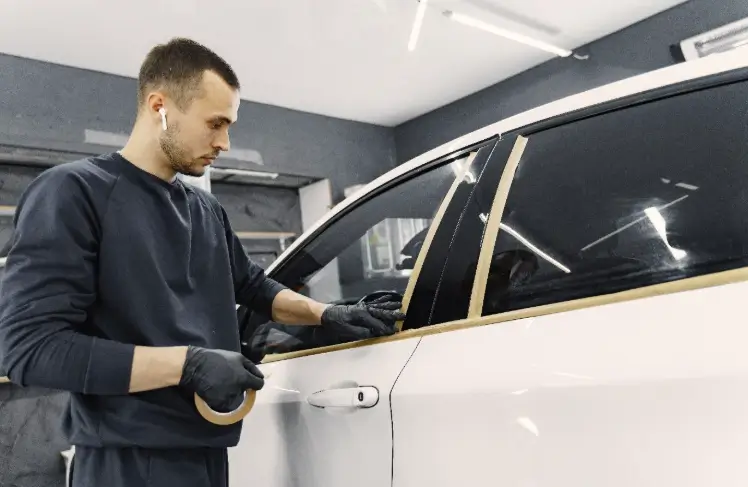
Most drivers think tint installation is a quick stick-and-go job, but on 3M Ceramic IR Film follows a layered process that protects clarity and performance. Here’s how the workflow moves from prep to finish at our Car Tinting Heroes Dubai garage.
Surface Prep & Glass Cleaning
The teams remove every trace of dust, residue, or previous adhesive. Proper cleaning ensures the 3M Ceramic IR Film bonds correctly, giving stable results expected in car tinting Dubai installs.
Film Positioning & Cutting
The film is shaped panel-by-panel. Using heat shaping and contouring tools, the film is matched to the exact curvature of your windows. This keeps the car window tinting stable and prevents peeling over time.
Application & Heat Bonding
A slip solution is applied, the film is set into place, and controlled heat allows the ceramic tint layer to settle into the glass. This step locks the film onto the glass so the IR rejection film and UV block tint deliver full performance under Dubai heat conditions.
Water Extraction & Edge Sealing
Any trapped moisture is removed through squeegee passes. Edges are sealed to prevent lifting and to maintain full performance of the IR rejection film across all viewing angles.
Final Inspection
The car is checked under different angles and lighting conditions to make sure clarity, alignment, and surface bonding are consistent.
Once the film settles, the change hits fast, less glare, less infrared slipping in. And if you want the work done by a team that handles car window tinting daily with consistent results, Car Tinting Heroes Dubai is already set up with the tools and techniques to deliver that level of finish.
Why 3M Ceramic IR Tint Is a Good Option for New Car Owners
Many people new to the roads quickly notice how glare and infrared buildup affect comfort and focus. That’s where 3M Ceramic IR Film steps in with steady infrared filtering that doesn’t rely on fading dyes or metallic coatings. The ceramic setup keeps the view open and cuts the strain that builds during long hours of sunlight.
Benefits at a glance:
Stable infrared control for more balanced cabin conditions
visibility that supports safer daily use
Reduced glare compared to standard car window tinting
Long-term performance through IR rejection film layering
For anyone adjusting to city routes and constant sun exposure, the difference between basic tint and a proper ceramic setup becomes noticeable surprisingly fast. It becomes a car tinting Dubai upgrade that manages infrared, glare, and UV without depending on dark shade levels.
3M Ceramic IR tint filters infrared at the particle level, keeps visibility, and stabilizes cabin conditions without relying on dyes or reflective coatings. The impact shows quickly once sunlight hits the glass, and the interior feels more controlled. For a clean installation that’s done with proper technique and steady results, Car Tinting Heroes Dubai handles ceramic tint work daily and delivers a finish built to last. When you want reliable infrared control and a view on every trip, we’re ready to set it up.